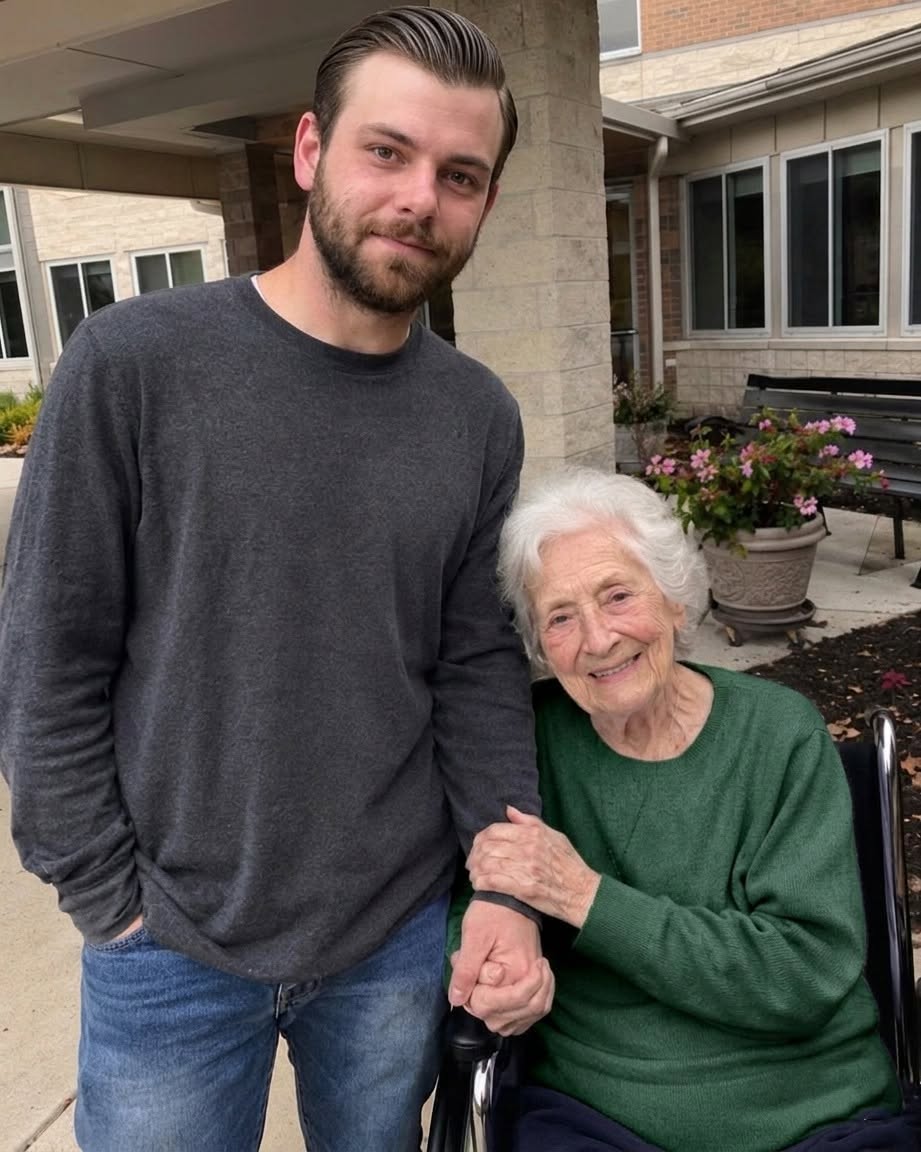
"Mamá, yo..."
"Shh." Me dio una palmada en la mejilla. "Sé lo que sé."
Entonces no lo entendía. Me convencí de que solo era la demencia, solo palabras sueltas flotando.
Esa noche, conduje a casa pensando en mi propia madre y en lo rara vez que me sentaba a su lado como me sentaba junto a Rosie. Me prometí a mí misma que lo haría mejor. Llama más a menudo. Quédate más tiempo.
Dos días después, sonó mi teléfono mientras cargaba cajas en el camión.
Era el director de la residencia.
"Jeremy. Rosie falleció mientras dormía anoche."
Bajé la caja sobre el pavimento mojado.
"Y te dejó algo."
Tres días después del funeral, me senté en la oficina de la directora Helen, mirando un sobre sellado que descansaba sobre su escritorio. Me había preparado para el duelo, no para los documentos.
"Sabía que no eras su hijo", dijo Helen con suavidad.
Levanté la cabeza. "¿Qué?"
"Desde la primera visita, Jeremy. Me lo dijo a la semana de que había pasado. Me pidió que guardara su secreto."
Con los dedos temblorosos, abrí el sobre. La letra de Rosie se deslizaba por la página, bucle en algunos puntos y firme en otros.
“My dear boy who is not my boy. My memory failed me, but my eyes never did. I knew your face was not his. I let you stay because you stayed. That was enough. The key opens what I have saved. Use half for my friends here. They have so little.”
I pressed my thumb against the paper. A small brass key slipped into my palm.
“She left it to you on purpose,” Helen said. “Not by mistake.”
Helen explained that since Rosie had left a safety deposit box and a written bequest behind, the nursing home’s legal executor would have to inform Tim as her next of kin. At the time, I barely thought about it.
News spread faster than I imagined. Four days later, Tim was pounding on my apartment door.
“Open up, Jeremy. I know you’re in there.”
I opened the door. He shoved past me, eyes frantic, his jacket only half-buttoned.
“Where is the key?”
“It’s not yours.”
“She was my mother. Not yours. MINE.”
“Then where were you?” I asked calmly.
Tim stopped. For one second, something broke behind his expression, the same brief flicker I had noticed in the coffee shop when he said he could not bear to see his mother like that. Then his face hardened once more.
“You manipulated a sick old woman. I have lawyers, Jeremy. Real ones. You’ll be lucky to keep your van.”
“I didn’t manipulate anyone. She knew.”
“Knew what?”
“Knew I wasn’t you. The whole time.”
He gave a short, ugly laugh. “Tell that to a judge. See how that sounds coming from the man I paid $500 a week.”
He slammed the door so hard behind him that a picture dropped from the wall.
Within a week, the legal documents came. Tim’s attorney challenged the bequest, accusing me of undue influence. Then calls began coming from relatives I had never even met, calling me a fraud, a con man, and a vulture.
That night, I sat on my mother’s couch with papers spread across the coffee table and almost decided to give it all up.
“What are you going to do, baby?” she asked.
“I don’t know, Ma. He has money. I have nothing.”
“You have the truth.”
The next morning, I drove to the nursing home. Margaret sat in the sunroom, knitting something blue and uneven.
“Jeremy,” she said, patting the chair beside her. “I wondered when you’d come.”
Vea el resto en la página siguiente.